 English
If you've ever searched for cable management solutions, you've likely seen terms like “zip ties”, “cable ties”, “tie wraps”, and “zap straps”. This often leads to a common question: Are cable ties and zip ties the same thing?
The short answer is yes. In most cases, zip ties and cable ties refer to the same self-locking fastening product. However, understanding materials, applications, and alternatives such as Velcro straps or cable lacing can help you choose the right solution for different environments.
This guide explains zip tie vs cable tie, compares common naming differences, and covers materials, reusable options, installation methods, industrial applications, and sourcing suggestions.
What Is the Difference Between Cable Ties and Zip Ties?
There is no functional difference between cable ties and zip ties. The discussion around zip tie vs cable tie is mainly about terminology. “Cable tie” is more commonly used in industrial, electrical, and manufacturing contexts, while “zip tie” is more common in consumer and everyday usage.
Both products use the same ratchet locking mechanism. The tail is inserted into the locking head, where internal teeth and a pawl prevent backward movement after tightening. Both are available in nylon and stainless steel versions, and both are used for bundling and securing cables, wires, hoses, and other components.
In practical applications, the difference between cable ties and zip ties is purely linguistic. Buyers may see different terms depending on the country, supplier, industry, or sales platform.
Tie Wraps, Zap Straps, and Zip Ties Explained
Different regions often use different names for the same fastening product, but terms such as tie wraps, zip ties, and zap straps generally refer to identical solutions for bundling cables and securing items.
Tie Wraps vs Zip Ties
The terms “tie wrap” and “zip tie” describe the same self-locking fastening product. Tie wraps are widely used in electrical installations, industrial bundling, and general organization. The difference lies only in naming preferences used by manufacturers, distributors, or local markets.
Zap Straps vs Zip Ties
In regions such as Canada, “zap strap” is a commonly used term for what many other markets call a “zip tie.” Both names refer to the same durable, self-locking cable fastening product, suitable for various industrial, commercial, and household applications.
Zip Ties vs Velcro
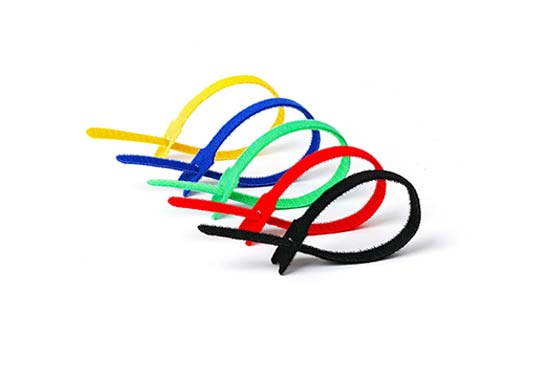
The choice between zip ties and Velcro depends on the application. Velcro straps are better for frequent adjustments, IT systems, temporary cable routing, and office cable management. Zip ties are more suitable for permanent installation, stronger fastening, outdoor use, and applications where cables do not need to be frequently adjusted.
What Are Zip Ties Made Of?
Most cable ties are made from engineered plastics or metals depending on the installation environment. Material selection directly affects tensile strength, flexibility, temperature resistance, UV resistance, and long-term service life.
Nylon 66 Cable Ties
Most standard cable ties use Nylon 66, also known as PA66. This high-strength engineering plastic is widely used in industrial applications because it provides a good balance of strength, flexibility, insulation performance, and cost efficiency.
Nylon 66 materials used in industrial products must meet global chemical safety and environmental requirements. Regulatory references from the European Chemicals Agency are often considered in material compliance evaluation.
Main benefits of Nylon 66 cable ties include high tensile strength, electrical insulation, abrasion resistance, chemical resistance, and reliable performance for general cable management.
UV-Resistant Nylon Cable Ties
UV-resistant cable ties are designed for outdoor use where sunlight exposure is a major factor. Standard nylon may age faster under long-term UV exposure, while UV-stabilized nylon compounds provide better outdoor durability and longer service life.
These cable ties are commonly used in solar systems, outdoor telecommunications, security camera installations, power infrastructure, and other outdoor wiring projects.
Stainless Steel Cable Ties
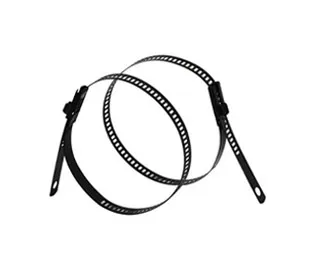
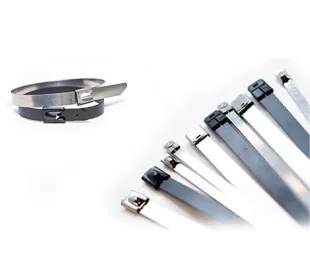
Stainless steel cable ties are used in extreme environments that require high strength, corrosion resistance, heat resistance, and long-term durability.
In industrial environments where safety compliance is critical, installation practices are often aligned with workplace safety guidance from organizations such as OSHA.
Stainless steel cable ties are widely used in marine applications, oil and gas, chemical plants, heavy industry, railway systems, offshore engineering, and harsh outdoor environments.
Buy Reusable Zip Ties: Are They Worth It?
Reusable zip ties are designed for multiple use cycles. Unlike standard single-use cable ties, reusable cable ties have a release mechanism that allows the strap to be opened and fastened again.
When Should You Buy Reusable Zip Ties?
Companies looking to buy reusable zip ties often choose them for flexibility, maintenance convenience, and sustainability. They are especially useful in applications where cables need to be frequently adjusted, replaced, or reorganized.
Main benefits include reusable design, lower long-term cost, easier maintenance, reduced waste, and improved flexibility during installation.
Common applications include data centers, temporary installations, equipment maintenance, office cable management, testing systems, and prototype wiring projects.
How to Choose the Right Cable Tie
Choosing the right cable tie depends on environment, application, load requirements, temperature conditions, and whether the installation needs to be permanent or adjustable.
Based on Usage
For permanent installations, standard zip ties or stainless steel cable ties are often preferred because they provide secure and stable fastening. For temporary systems, reusable ties are more practical. For frequent adjustments in IT or office environments, Velcro straps may be a better choice.
Based on Environment
Indoor applications can usually use standard nylon cable ties. Outdoor applications should use UV-resistant cable ties or stainless steel cable ties. Harsh environments involving heat, chemicals, salt spray, vibration, or heavy mechanical stress usually require stainless steel cable ties.
Based on Strength Requirement
Light cable bundling can use standard nylon ties, while heavy cable bundles require wider and stronger cable ties. For extreme strength or long-term outdoor durability, stainless steel cable ties are the more reliable option.
Common Applications of Zip Ties
Electrical Wiring
Zip ties are used for bundling and securing electrical cables in residential, commercial, and industrial wiring systems. They help keep wiring neat, improve safety, and simplify maintenance.
Telecommunications
In telecommunications and data centers, zip ties are used in structured cabling and fiber management. Proper cable organization improves airflow, accessibility, and long-term maintenance efficiency.
Automotive Industry
Automotive wiring harnesses require stable and lightweight fastening. Zip ties help organize vehicle wiring, reduce movement, and protect cables from vibration-related wear.
Solar Energy Systems
UV-resistant cable ties are widely used in solar installations because panels and cables are exposed to outdoor sunlight for long periods. Renewable energy infrastructure is often supported by standards and development initiatives from organizations such as the U.S. Department of Energy.
Industrial Manufacturing
In industrial manufacturing, zip ties are used for cable routing, labeling, hose management, equipment assembly, and system organization.
Home and Office
For home and office use, zip ties provide a simple and low-cost way to manage computer cables, appliance wiring, entertainment systems, and general storage organization.
Zip Ties vs Cable Ties vs Alternatives
Although zip ties and cable ties are the same product, buyers may also consider other cable management alternatives depending on the application. Velcro straps are suitable for reusable cable management, cable lacing is used in certain professional wiring systems, and stainless steel ties are selected for heavy-duty environments.
Why Source Zip Ties from Hont Electrical?
Hont Electrical provides complete cable tie and wiring accessories solutions for industrial, electrical, telecommunications, automotive, solar, and general cable management applications.
For distributors, wholesalers, contractors, and industrial buyers, sourcing directly from experienced zip tie manufacturers can help improve product consistency, reduce procurement costs, and provide more options in material, size, color, packaging, and application-specific performance.
Whether customers need standard nylon cable ties, UV-resistant cable ties, reusable zip ties, stainless steel cable ties, or bulk cable management products, Hont Electrical supports different sourcing needs for global markets.
FAQs
How to undo a zip tie without cutting it?
Insert a thin tool such as a pin or small screwdriver into the locking head, lift the pawl gently, and pull the strap backward. Reusable cable ties make this process easier because they have a release mechanism.
How to unlock a zip tie?
Press the locking tab inside the head and slowly pull the strap backward without forcing the mechanism. Standard zip ties are not designed for repeated unlocking, so care is needed.
How to use metal zip ties?
Wrap the stainless steel tie around the bundle, insert the tail into the locking head, tighten securely, and trim the excess tail using proper tools.
What are zip ties made of?
Most zip ties are made of Nylon 66, also known as PA66. Heavy-duty versions may use stainless steel for extreme environments.
Are cable ties and zip ties the same thing?
Yes. Cable ties and zip ties refer to the same product. The difference is mainly terminology.
What is the difference between cable ties and zip ties?
There is no functional difference. “Cable tie” is more common in industrial contexts, while “zip tie” is more common in consumer language.
Are stainless steel cable ties stronger than nylon cable ties?
Yes. Stainless steel cable ties provide higher strength and better resistance to heat, chemicals, corrosion, UV exposure, and harsh environments.
Are Velcro ties better than zip ties?
Velcro ties are better for reusable cable management and frequent adjustments. Zip ties are stronger for permanent fastening and industrial installation.
Where can I get zip ties?
Zip ties can be purchased from hardware stores, online platforms, or directly from zip tie manufacturers. For bulk orders, better pricing, and more material and size options, many buyers prefer to contact zip tie manufacturers directly.
Conclusion
Zip ties and cable ties are the same fastening product, with the difference mainly coming from naming habits in different markets. Tie wraps, zap straps, and zip ties all refer to similar self-locking fastening solutions used for cable bundling and organization.
For permanent cable fastening, nylon or stainless steel zip ties are practical choices. For temporary cable management, reusable zip ties or Velcro straps may be more suitable. The best option depends on environment, strength requirements, installation frequency, and long-term cost.
For businesses looking for stable quality and bulk supply, working with an experienced cable tie and wiring accessories provider such as Hont Electrical can help ensure better product selection and more reliable sourcing.