 宏泰电器有限公司
Tel
0577-62795555
宏泰电器有限公司
Tel
0577-62795555
Every year, millions of cable ties are installed outdoors.
On solar farms.
On telecom towers.
On rooftops.
On HVAC systems.
On fences, cameras, and lighting.
And every year, thousands of them fail.
Quietly.
Suddenly.
Disastrously.
Projects stall.
Cables fall.
Repairs multiply.
Budgets bleed.
Not because technicians are careless.
Not because the work is rushed.
But because of one seemingly harmless decision:
Choosing the wrong color of cable tie.
It sounds absurd.
Trivial.
Too simple to matter.
But once the sun rises, color becomes chemistry.
Chemistry becomes lifespan.
And lifespan becomes the difference between a system that lasts—and a system that collapses.
So today, we settle the debate.

The world believes cable tie color is cosmetic.
The truth is: color is performance.
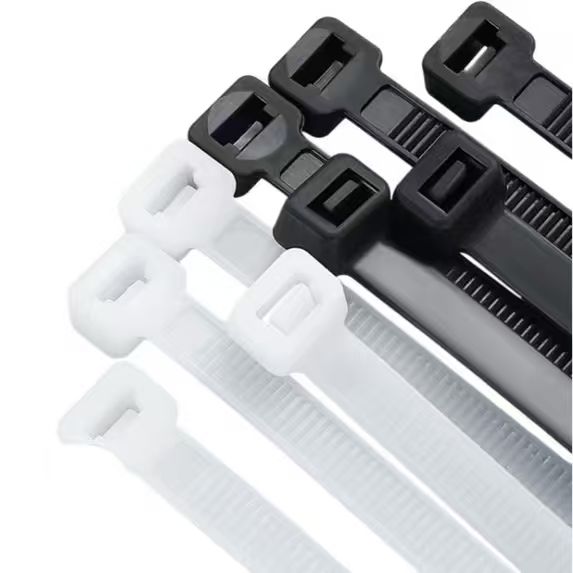
The white color comes from natural nylon.
Pure. Untreated. Unprotected.
They are created for a life lived indoors:
IT rooms
Office wiring
Appliances
Light-duty packaging
Expose them to sunlight … and the countdown begins.
The sun attacks the polymer chains, breaking them molecule by molecule.
The tie becomes chalky.
Then brittle.
Then useless.
Their color comes from carbon black, the most powerful UV absorber nature ever made.
Carbon black is not a pigment.
It is armor.
When mixed into nylon, it creates an invisible shield against UV radiation— giving the tie the strength to survive where others fall apart.
As Ogilvy would say:
“White is a color.
Black is a technology.ˮ
Almost always yes.
Carbon black is the industryʼs proven method for UV stabilization.
Whatʼs the difference between white and black cable ties?
Everything that matters.
White = indoor, short-term Black = outdoor, long-term
That difference decides whether your work stays intact—or falls apart.
Take a white nylon tie and place it under direct sunlight.
Within weeks—or at most a few months—its strength begins to disappear. UV radiation slices through nylon like a blade.
The tie may look fine.
But it has become fragile, hollow, brittle.
And then one day, with no warning …
Snap.
Expected outdoor lifespan of white ties:
2 to 4 months.
White ties outdoors arenʼt an economical choice. Theyʼre a delayed failure.
Now consider a black UV-stabilized tie.
Armed with carbon black, it absorbs UV, dissipates it, shields itself, and keeps its mechanical properties far longer than any white tie could hope to.
Expected outdoor lifespan of black UV ties:
Mild climates: 5-7 years
Temperate climates: 3-5 years
Harsh tropical sunlight: 2-3 years
A simple color—
a radically different outcome.
And then there are environments where nylon simply isnʼt enough:
Desert heat
Coastal salt
Industrial chemicals
Fire risk
Vibrations
High-voltage environments
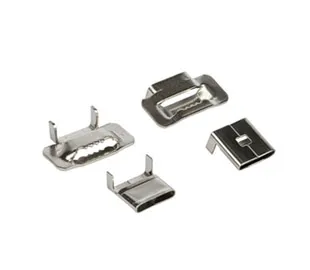
Here, stainless steel cable ties reign supreme.
Grade 316 stainless steel is immune to:
UV
Salt
Heat
Corrosion
It lasts not years— but decades.
If durability is a negotiation, stainless steel always wins.

Some projects are dynamic.
Some environments are harsh.
Some systems must be adjusted weekly, not welded in place.
In situations of:
Frequent moves
Cable upgrades
Aesthetic requirements
Sensitive wires
Industrial wear
standard cable ties are not the right tool.
Professionals know this.
Here is what they reach for instead.
Hook-and-Loop (Velcro) Straps
Reusable.
Adjustable.
Gentle.
Perfect for:
data centers, server racks, AV installations.
Spiral Wrap
Lets you add and remove wires without cutting ties.
A favorite in automotive and industrial assembly lines.
Stainless-Steel Hose Clamps
When vibration, pressure, and heat threaten everything else, hose clamps step in.
As Ogilvy would say:
“Tools are chosen not by habit, but by consequences.ˮ
Police donʼt use cable ties.
They use restraints.
These are made from:
Extra-heavy-duty nylon
Oversized locking heads
One-way ratchet systems
They are built for strength—
not sunlight.
Not weather.
Not outdoor installations.
The comparison ends there.

A solar contractor in Southern Europe contacted us with a problem. Their installations were failing.
Not the panels.
Not the inverters.
Not the batteries.
The cable ties.
Hundreds of them.
Brittle. Cracked. Snapped.
An entire year of work—compromised by a $0.03 component.
When we inspected the ties, the truth emerged:
White nylon ties
No UV protection
No certification
Weak locking heads
Incorrect moisture content
Zero tensile testing
They were never meant for outdoor use.
Our SoIution:
Replaced all ties with UL-certified black UV-stabilized nylon
Added stainless steel ties in high-heat zones
Implemented moisture-controlled molding
Conducted tensile + accelerated UV aging tests
Trained installers on environmental exposure
The ResuIts After 12 Months:
Cable tie failures dropped94%
Maintenance hours dropped 70%
Customer complaints dropped 100%
Repeat orders increased 38%
The sun taught an expensive lesson—
but it will not teach it twice.
Application Scenario | Best Product | Outdoor Lifespan | Why |
| Indoor / temporary | White Nylon Cable Ties | Not recommended | Cheapest option; no UV resistance |
General outdoor use | Black UV Nylon Cable Ties | 2-5 years | Excellent UV protection |
Solar farms / coastal areas | 316 Stainless Steel Ties | 20+ years | UV-proof + corrosion- proof |
Adjustable wiring | Hook-and-Loop Straps | Reusable | No damage to cables |
Professional cable protection | Spiral Wrap | Long-term | Clean, organized, expandable |
This table is used by OEMs, contractors, and distributors worldwide. Because it turns guesswork into confidence.
Cable ties are not glamorous.
They donʼt shine.
They donʼt move.
They donʼt impress.
Until they fail.
Then they become the most important part of your installation.
White cable ties are for comfort.
Black cable ties are for survival.
Stainless steel cable ties are for eternity.
So choose as if the success of your project depends on it— because it does.
In Ogilvyʼs words:
“The right choice is never expensive. The wrong one always is.ˮ
Choose black for the sun.
Choose white for the office.
Choose stainless steel when the world becomes hostile. And let your work stand tall,
long after the cheap ties have snapped.
 English