 English
A Complete Guide to Cable Ties
In modern electrical, industrial, automotive, and telecommunications industries, cable ties have become one of the most essential fastening and cable management solutions. These simple yet highly effective products help organize cables, secure components, improve workplace safety, and reduce maintenance costs.
Whether you are sourcing products from a cable tie manufacturer in China or simply trying to understand the different cable tie types available on the market, this guide covers everything you need to know. From materials and applications to certifications and selection criteria, understanding the fundamentals of cable ties can help businesses make informed purchasing decisions and improve project efficiency.
What Are Cable Ties?
Cable ties, commonly referred to as zip ties, wire ties, or tie wraps, are fastening devices used to bundle, organize, and secure wires, cables, hoses, and other components. They consist of a flexible strap and a locking head that creates a permanent or reusable fastening solution.
Originally developed for the aerospace industry, cable ties have evolved into versatile products used across nearly every industrial sector. Today, manufacturers offer a wide range of sizes, materials, colors, and designs to meet different environmental and mechanical requirements.
How Do Cable Ties Work?
The working principle of a cable tie is simple but highly effective. The tail of the tie is inserted through the locking head, where an internal pawl engages with the teeth on the strap. Once tightened, the mechanism prevents backward movement, creating a secure hold around the bundled materials.
Advantages of this design include:
Quick installation without special tools
Strong and reliable fastening
Lightweight construction
Cost-effective cable management
Resistance to vibration and movement
For industrial projects, many companies prefer sourcing from a reputable cable tie manufacturer in China because of large production capacity, consistent quality control, and competitive pricing.
What Are Cable Ties Made Of?
The performance of a cable tie largely depends on its material composition.
Common cable tie materials include:
Stainless steel
Halogen-free engineering plastics
UV-stabilized nylon compounds
Manufacturers often modify raw materials with additives to improve UV resistance, flame retardancy, weather resistance, or heat tolerance.
Cable Tie Types
Different applications require different cable tie types. Understanding these variations helps buyers select the most suitable solution.
Standard Nylon Cable Ties
Standard nylon cable ties are the most widely used products in the market. They provide excellent tensile strength, flexibility, and cost-effectiveness for general-purpose cable management.
Typical applications include:
· Electrical wiring
· Home cable organization
· Industrial control panels
· Office networking systems
A professional nylon cable tie manufacturer can provide various lengths, widths, and packaging options to meet different project requirements.
Heavy Duty Cable Ties
Heavy-duty cable ties are engineered for applications requiring higher tensile strength and greater load-bearing capacity.
Common uses include:
· Construction projects
· Heavy machinery
· Infrastructure installations
· Utility pole cable management
These ties typically feature wider straps and reinforced locking mechanisms.
UV Resistant Cable Ties
Outdoor installations expose cable ties to sunlight, which can degrade standard nylon over time. UV resistant cable ties(/products/weather-reststant-cable-ties.html) contain carbon black or specialized UV stabilizers that significantly extend service life.
Applications include:
· Solar energy systems
· Outdoor telecommunications
· Security camera installations
· Utility networks
Heat Resistant Cable Ties
Heat-resistant cable ties are designed to perform in elevated temperatures where standard nylon products may lose strength.
Industries that frequently use heat-resistant ties include:
· Automotive manufacturing
· Industrial equipment
· HVAC systems
· Electrical power generation
Stainless Steel Cable Ties
Stainless steel cable ties offer exceptional durability in harsh environments. They provide resistance to:
· Corrosion
· Chemicals
· Extreme temperatures
· UV exposure
They are commonly used in marine, offshore, mining, and chemical processing industries.
Reusable Cable Ties
Unlike standard self-locking ties, reusable cable ties can be released and reused multiple times. They are ideal for temporary installations and maintenance work.
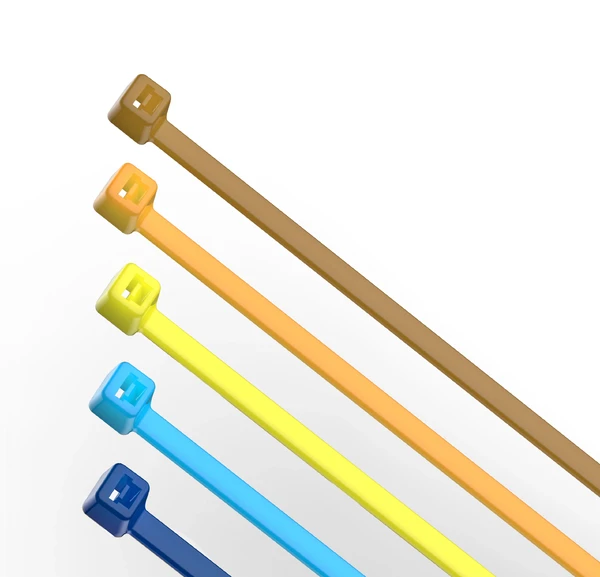
Colored Cable Ties
Colored cable ties simplify cable identification and organization. Different colors can represent specific systems, departments, voltages, or network categories.
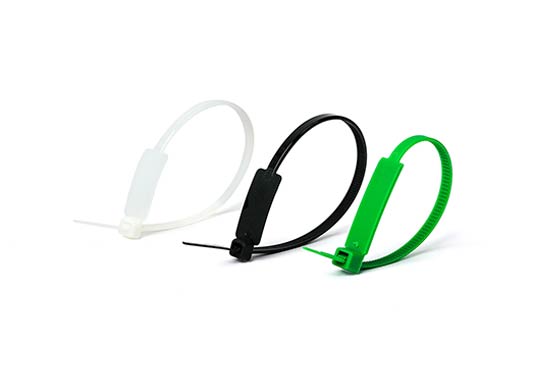
Mountable & Push Mount Cable Ties
These specialized ties feature integrated mounting options that secure cable bundles directly to surfaces or panels, reducing installation time and improving cable routing.
Cable Tie Size and Strength Chart
Width | Length Range | Tensile Strength |
2.5mm | 100-200mm | 18lbs |
3.6mm | 150-300mm | 40lbs |
4.8mm | 200-400mm | 50lbs |
7.6mm | 300-550mm | 120lbs |
9.0mm | 550-1200mm | 175lbs |
Cable Tie Materials Overview
The material selection determines the performance, lifespan, and environmental suitability of cable ties.
Nylon 66 Cable Ties
Nylon 66 cable ties are widely used because they provide an excellent balance of strength, flexibility, durability, and affordability. For example, self-locking plastic straps are widely applied in electrical and electronic equipment, lighting, hardware, pharmaceutical, chemical, computer, and industrial fields.
Main benefits of Nylon 66 cable ties include:
High tensile strength
Excellent wear resistance
Good chemical resistance
Stable mechanical performance
Reliable performance for industrial cable management
Many leading cable tie manufacturers use UL-approved Nylon 66 to produce high-quality cable ties for professional applications.
PA6 vs PA66
Understanding the differences between PA6 and PA66 is important for buyers.
Property | PA6 | PA66 |
Tensile Strength | Good | Excellent |
Heat Resistance | Moderate | Higher |
Moisture Absorption | Higher | Lower |
Durability | Good | Excellent |
Industrial Usage | Light-Medium Duty | Medium-Heavy Duty |
PA66 remains the preferred choice for most industrial-grade cable ties.
Why Raw Material Quality Matters?
Premium cable ties are commonly manufactured using virgin PA66 resin from globally recognized suppliers such as Ascend Performance Materials.
Stainless Steel
Stainless steel cable ties provide maximum durability and reliability under extreme operating conditions.
Advantages include:
· Outstanding corrosion resistance
· Fire resistance
· High load capacity
· Long service life
Halogen-Free & Eco-Friendly Materials
Environmental regulations increasingly require halogen-free materials. These products generate lower smoke and fewer toxic emissions during fire incidents, making them suitable for transportation, data centers, and public infrastructure.
How to Choose the Right Cable Tie?
Choosing the correct cable tie improves safety, durability, and installation efficiency.
Selection Guide Table
Selection Factor | Key Consideration | Recommended Cable Tie |
Indoor Use | Standard conditions | Standard nylon cable tie |
Outdoor Use | UV exposure | UV resistant cable tie |
High Temperature | Heat resistance | Heat resistant cable tie |
Corrosive Environment | Chemicals or salt | Stainless steel cable tie |
Large Cable Bundles | High tensile load | Heavy duty cable tie |
Temporary Installation | Frequent adjustments | Reusable cable tie |
Based on Temperature
Consider both operating and installation temperatures. Extreme temperatures can affect flexibility and performance.
Based on Outdoor UV Exposure
For outdoor projects, always select weatherproof zip ties or UV-resistant products to prevent premature aging.
Based on Tensile Strength
The tie must support the total weight and movement of the cable bundle without failure.
Based on Industry Requirements
Different industries have unique requirements regarding fire safety, chemical resistance, and environmental compliance.
Based on Cable Bundle Diameter
Selecting the correct length ensures proper installation while minimizing material waste.
Common Cable Tie Applications
Electrical Wiring
Electrical contractors rely on cable ties to organize wiring systems, improve safety, and simplify maintenance.
Automotive Industry
Vehicles contain thousands of wires that must be securely routed. Cable ties prevent vibration damage and maintain organized harnesses.
Telecommunications
Network infrastructure requires effective cable management for performance and maintenance accessibility.
Solar Energy Systems
Solar installations use large quantities of UV resistant cable ties because they operate continuously under direct sunlight.
Industrial Manufacturing
Manufacturing facilities use cable ties for machine wiring, labeling systems, hose management, and equipment assembly.
Home & Office Cable Management
Consumers frequently use cable ties to organize computer cables, entertainment systems, and appliance wiring.
Common Cable Tie Applications
Electrical Wiring
Electrical contractors rely on cable ties to organize wiring systems, improve safety, simplify maintenance, and keep installations neat.
Automotive Industry
Vehicles contain thousands of wires that must be securely routed. Cable ties help prevent vibration damage and maintain organized wire harnesses.
Telecommunications
Network infrastructure requires effective cable management for stable performance and easy maintenance. Cable ties are widely used in data centers, communication cabinets, and outdoor telecom installations.
Solar Energy Systems
Solar installations use large quantities of UV resistant cable ties because they operate continuously under direct sunlight and outdoor weather conditions.
Industrial Manufacturing
Manufacturing facilities use cable ties for machine wiring, labeling systems, hose management, equipment assembly, and general cable routing.
Home and Office Cable Management
Consumers frequently use cable ties to organize computer cables, entertainment systems, appliance wiring, and office network cables.
Cable Tie Standards and Certifications
Quality certifications help buyers evaluate product safety and performance.
UL Certification
UL listed cable ties undergo rigorous testing to verify electrical safety, tensile strength, flammability performance, and long-term reliability.
Important related keywords include:
· UL listed cable ties
· UL type 21s cable ties
· standard zip ties
RoHS & REACH Compliance
RoHS and REACH compliance(https://environment.ec.europa.eu/topics/waste-and-recycling/rohs-directive_en) ensures products do not contain hazardous substances restricted by international regulations.
ISO9001 Manufacturing Standards
A certified cable tie manufacturer operating under ISO9001 standards demonstrates commitment to quality management and continuous improvement.
Flame Retardant Ratings
Flame-retardant cable ties are widely used in electrical and industrial installations where fire safety is critical.
Other relevant standards include:
· mil spec cable ties
· mil spec zip ties
· GB cable ties
· UV resistant cable standard
FAQs
What is the strongest type of cable tie?
Stainless steel cable ties generally offer the highest tensile strength and environmental resistance.
Are cable ties UV resistant?
Not all cable ties are UV resistant. Outdoor installations should use specially formulated UV resistant cable ties.
Can cable ties be reused?
Standard cable ties are typically single-use, but reusable designs can be opened and reused multiple times.
What size cable tie do I need?
The correct size depends on bundle diameter, load requirements, and installation environment.
How long do nylon cable ties last outdoors?
High-quality UV-resistant nylon cable ties can last several years outdoors depending on climate conditions.
What is the difference between PA6 and PA66 cable ties?
PA66 provides higher strength, better heat resistance, and superior long-term performance.
Are stainless steel cable ties better than nylon?
For extreme environments, yes. For standard indoor applications, nylon cable ties are often more economical.
Can cable ties withstand high temperatures?
Yes. Specialized heat-resistant nylon and stainless steel cable ties are designed for elevated temperatures.