 English
The global nylon cable ties market continues to expand as industries increasingly require efficient, low-cost, and scalable cable management solutions. These fastening components are widely used in electrical systems, automotive manufacturing, telecommunications networks, construction projects, and industrial automation.
With rising infrastructure investment worldwide, buyers increasingly rely on stable sourcing from a professional nylon cable tie manufacturer to ensure consistent product quality, reliable delivery, and long-term supply stability.
Overview of Nylon Cable Ties Market
The nylon cable ties market is driven by global industrialization and rapid electrification across multiple sectors. Nylon cable ties are used to bundle, organize, and secure wires, cables, hoses, and small components in both commercial and industrial environments.
Key demand drivers include the expansion of smart grid infrastructure, growth of data centers and IT systems, increasing automotive electronic complexity, renewable energy installations, and rising demand for cost-efficient fastening solutions.
According to industry polymer data from the International Energy Agency, petrochemical-based materials such as nylon continue to experience stable long-term demand in industrial applications, especially in infrastructure-related sectors.
Compared with metal fastening systems, nylon cable ties remain preferred in many applications because of their flexibility, insulation properties, lightweight structure, easy installation, and lower procurement cost.
Nylon Cable Tie Price and Market Dynamics
Nylon Cable Tie Price Factors
The nylon cable tie price is influenced by several key factors, including Nylon 66 resin cost, production scale, automation level, product size, tensile strength, UV-resistant additives, flame-retardant materials, packaging requirements, and OEM customization.
Because nylon is derived from petrochemical feedstocks, fluctuations in global oil prices and chemical raw material supply can directly influence production costs. For buyers, this means nylon cable tie prices may change depending on raw material trends and factory production conditions.
Nylon Market Price Trends
The broader nylon market price is closely linked to chemical supply chains and raw material availability. Research from Plastics Europe shows that polymer pricing is strongly impacted by energy markets, feedstock costs, and global production capacity.
These fluctuations affect both manufacturers and distributors. As a result, professional nylon cable tie manufacturers need to continuously optimize production efficiency, material procurement, and quality control to remain competitive in the global market.
Nylon Cable Tie Sizes and Product Segmentation
Nylon Cable Tie Sizes Overview
Different nylon cable tie sizes are designed for different applications. Small sizes such as 100–150mm are commonly used for electronics and light wiring. Medium sizes from 150–300mm are suitable for general electrical installations. Larger sizes from 300–500mm are often used for industrial cable bundling, while 500mm and above are mainly applied in heavy-duty fastening systems.
Proper size selection ensures optimal tensile strength, installation safety, and material efficiency. If the cable tie is too short or too weak, it may fail under tension. If it is too large, it may increase material waste and installation cost.
Product Segmentation in the Market
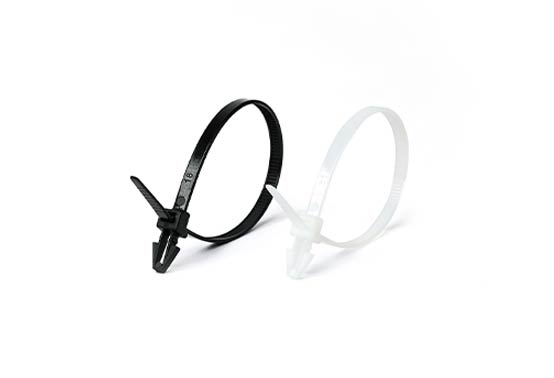
The nylon cable ties market includes multiple product categories, such as standard self-locking cable ties, UV-resistant outdoor cable ties, heavy-duty reinforced cable ties, releasable and reusable cable ties, and colored identification cable ties.
These product variations allow suppliers to serve different industrial requirements efficiently. For example, standard nylon cable ties are suitable for indoor wiring, while UV-resistant cable ties are better for solar, telecom, and outdoor infrastructure applications.
Nylon Cable Tie Manufacturer and Supply Chain
Nylon Cable Tie Manufacturer Role
A nylon cable tie manufacturer is responsible for nylon raw material processing, injection molding production, locking mechanism design, tensile strength testing, quality inspection, packaging, and export preparation.
Most global buyers source from Asia-based factories due to large-scale production advantages, mature supply chains, and cost efficiency. For distributors and wholesalers, working directly with an experienced manufacturer can help reduce procurement costs and improve product consistency.
Nylon Cable Tie Suppliers
Nylon cable tie suppliers usually provide distribution services such as regional inventory support, fast logistics, small and medium batch orders, and multi-category product sourcing. In many cases, buyers combine direct factory sourcing with local suppliers to optimize both cost and delivery speed.
Wholesale Nylon Cable Tie Market
The nylon cable ties market is heavily driven by wholesale procurement. Large buyers include electrical contractors, construction companies, industrial distributors, OEM manufacturers, hardware wholesalers, and maintenance service providers.
Bulk purchasing reduces unit cost and ensures long-term supply stability. For large projects, wholesale nylon cable tie sourcing also helps maintain product consistency across multiple installation sites.
Regional Market Analysis
US Nylon Cable Ties Market
The US nylon cable ties market is one of the largest globally. Demand is supported by an advanced construction industry, strong telecommunications infrastructure, an established automotive manufacturing base, and high demand in maintenance and repair operations.
In the US market, buyers often focus on product quality, tensile strength, certification, packaging, and supply reliability. This makes stable manufacturing capability especially important for export-oriented cable tie suppliers.
US Stainless Steel Cable Ties Market
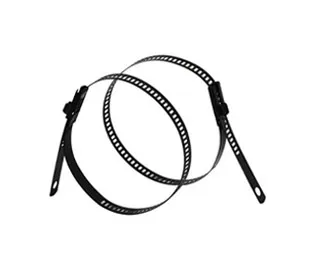
The US stainless steel cable ties market is more specialized and serves extreme environments such as oil and gas, aerospace, marine, rail transit, and heavy industry. According to ASTM material standards, stainless steel is widely used where high strength and corrosion resistance are required.
Stainless-Steel Cable Ties Market Overview
The global stainless-steel cable ties market continues to grow due to offshore engineering projects, renewable energy expansion, chemical processing industries, industrial automation systems, and infrastructure upgrades.
IEC electrical installation standards also emphasize the importance of durable fastening systems in harsh environments. Compared with nylon, stainless steel cable ties are used in more extreme, high-load, and corrosion-prone conditions.
Industry Trends in Nylon Cable Ties Market
Growth Drivers
The nylon cable ties market is expanding due to infrastructure modernization, smart manufacturing adoption, electrical system expansion, renewable energy deployment, and the growing need for efficient cable management in industrial environments.
Product Innovation Trends
Key innovations include UV-stabilized nylon compounds, heat-resistant formulations, reusable locking mechanisms, flame-retardant materials, eco-friendly polymer materials, and improved tensile strength designs.
As industrial applications become more demanding, buyers are no longer only looking for low-cost standard cable ties. They increasingly require application-specific products that can perform reliably under outdoor exposure, temperature variation, vibration, and long-term mechanical stress.
Market Challenges
Despite strong growth, the nylon cable ties market still faces several challenges. These include raw material price volatility, environmental pressure on plastics, competition from metal alternatives, and quality inconsistency among low-cost suppliers.
For B2B buyers, choosing a reliable manufacturer is critical because low-quality cable ties may break, age quickly, or fail under real installation conditions.
Market Comparison: Nylon vs Stainless Steel Cable Ties
Nylon cable ties and stainless steel cable ties serve different market needs. Nylon cable ties are widely used because of their low cost, flexibility, insulation properties, and broad application range. Stainless steel cable ties are selected for harsher environments where strength, fire resistance, corrosion resistance, and long-term durability are more important.
Why Choose Hont Electrical as Your Nylon Cable Tie Manufacturer?
As a professional cable tie and wiring accessories solutions provider, Hont Electrical supplies nylon cable ties, self-locking cable ties, weather-resistant cable ties, stainless steel cable ties, and other cable management products for global buyers.
For distributors, wholesalers, contractors, and industrial customers, stable product quality and reliable delivery are essential. Hont Electrical supports customers with multiple product sizes, different material options, bulk supply, export experience, and practical cable management solutions for different application markets.
By working with a reliable manufacturer, businesses can reduce sourcing risks, maintain consistent product quality, and better respond to changing market demand in the nylon cable ties industry.
FAQs – Nylon Cable Ties Market
What is driving the nylon cable ties market growth?
The nylon cable ties market is driven by infrastructure expansion, automation, renewable energy projects, telecommunications development, and rising electrical installation demand worldwide.
What affects nylon cable tie price?
Nylon cable tie price depends on Nylon 66 raw material cost, production scale, product size, tensile strength, performance additives, packaging, and customization requirements.
Why does nylon market price fluctuate?
The nylon market price fluctuates due to crude oil price changes, chemical raw material supply, energy costs, supply chain disruptions, and global production capacity.
What is the difference between nylon cable tie manufacturers and suppliers?
A nylon cable tie manufacturer produces the product through material processing, injection molding, testing, and packaging. Nylon cable tie suppliers usually handle distribution, inventory, and regional delivery.
Why is the US nylon cable ties market important?
The US nylon cable ties market is important because of strong demand from construction, telecommunications, automotive manufacturing, electrical installation, and industrial maintenance sectors.
Are stainless steel cable ties replacing nylon cable ties?
No. Stainless steel cable ties are mainly used in harsh or high-strength environments, while nylon cable ties remain the preferred choice for most general cable management applications because of their lower cost and easier installation.
Conclusion
The global nylon cable ties market continues to expand due to strong demand across electrical, automotive, construction, telecommunications, renewable energy, and industrial automation industries. Although nylon cable tie price may fluctuate with raw material conditions, overall market demand remains stable and growing.
By sourcing from a reliable nylon cable tie manufacturer, businesses can ensure consistent quality, stable supply, and better long-term procurement efficiency. At the same time, comparisons with the stainless-steel cable ties market show that both materials serve important but different roles in global industrial fastening systems.
For buyers looking for complete cable tie and wiring accessories solutions, Hont Electrical provides practical product options for different markets, applications, and procurement needs.